

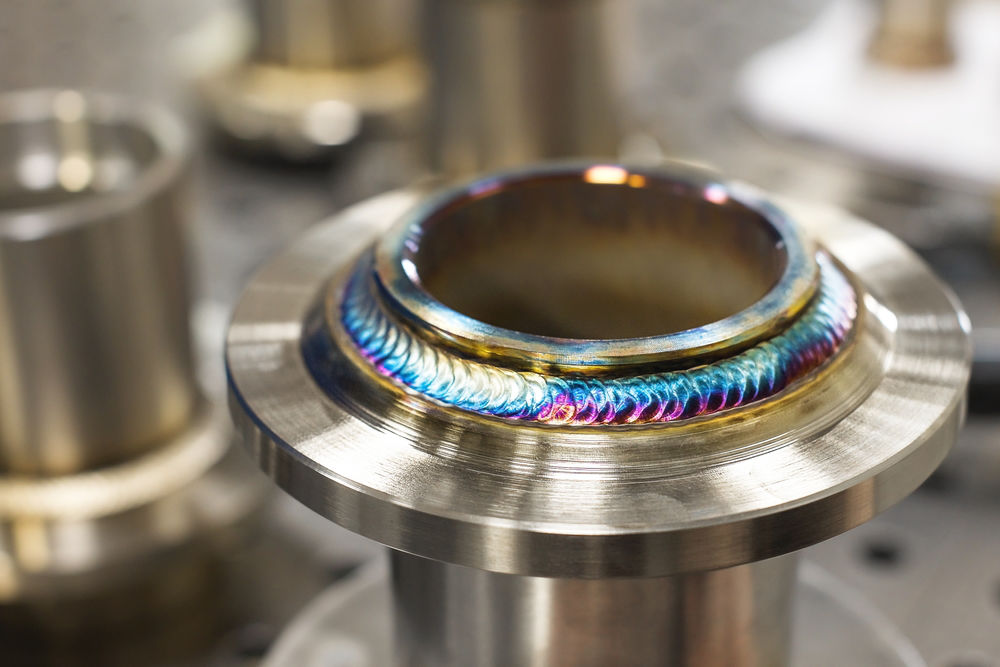
The right approach depends on the grade. We weld 304 and 304L for general fabrication and food-contact parts, 316 and 316L where chloride exposure or washdown chemicals are a factor, and duplex grades where higher strength and stress-corrosion resistance matter. Each one has its own heat input window, filler match, and distortion behavior, and we build the procedure around the grade rather than running everything the same way.
- Controlled heat input and interpass temperature to prevent sensitization and protect corrosion resistance
- Back-purge on TIG root passes for tube, pipe, and vessel work, so the inside of the weld is as clean as the outside
- Dedicated stainless tooling, brushes, and grinding media — no carbon steel cross-contamination, which is the most common cause of surface rust on finished stainless
- Filler metal matched to the base grade, with low-carbon fillers where sensitization is a concern
- Passivation and finishing coordinated through our sister company, Rhinehart Finishing, to restore the passive layer after welding
